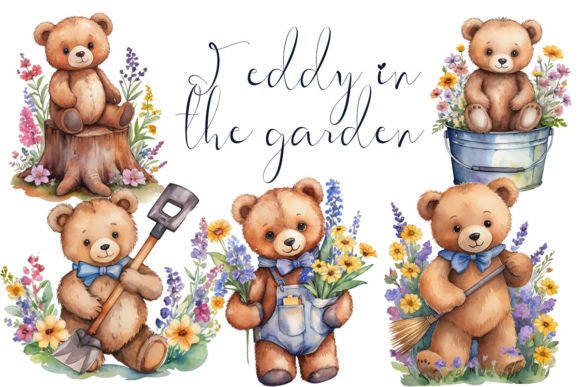
Watercolor Teddy Bear Clipart: An Embroidery Review
As a professional embroidery designer and product reviewer, I approach every new digital asset with a specific question: will this actually translate into stitches? When evaluating Watercolor Teddy Bear Clipart,Teddy, Png, my focus shifts immediately from the screen to the hoop. While this asset is categorized under Illustrations, its soft edges and blended tones present unique opportunities and challenges for machine embroidery. For Etsy sellers, craft business owners, and makers creating personalized gifts, understanding how this watercolor aesthetic behaves on fabric is the difference between a muddy stitch-out and a boutique-quality finished product.
First Impressions and Emotional Resonance
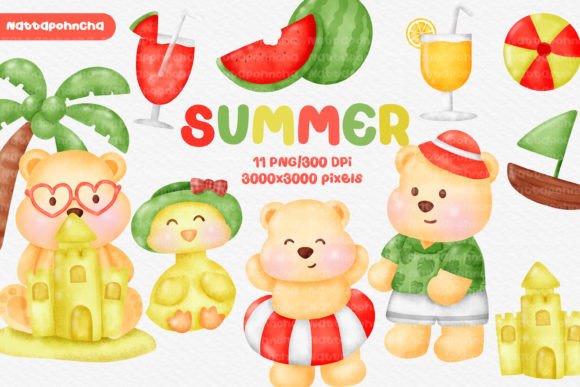
My initial assessment of Watercolor Teddy Bear Clipart,Teddy, Png reveals a design that leans heavily into nostalgia and comfort. The visual personality is undeniably sweet, featuring the soft gradients and organic lines typical of hand-painted artwork. Unlike rigid vector art, this illustration carries an inherent warmth that customers associate with high-end nursery decor and heirloom baby embroidery. The shape feels balanced but not overly symmetrical, which gives it a handmade charm even before a single needle penetrates the fabric.
For those selling custom apparel or holiday gifts, this mood is commercially valuable. It avoids the generic, mass-produced look that often plagues stock embroidery files. However, as a designer, I note that the "watercolor" effect is an illusion we must recreate with thread. The PNG format provides excellent transparency for digital mockups, allowing you to visualize placement on sweatshirts or tote bags instantly. Yet, the true test lies in interpreting those painted washes into satin stitch, fill stitch, and running stitch combinations that retain the original artwork's tenderness without becoming too dense for delicate fabrics.
Real-World Application: The Custom Sweatshirt Test
To truly evaluate this design, I mentally applied it to a current client request: a personalized crewneck sweatshirt for a toddler’s birthday party. In this real-life scenario, Watercolor Teddy Bear Clipart,Teddy, Png serves as the centerpiece. Sweatshirt fleece is textured and stretchy, making it a demanding canvas for detailed illustrations. The bear’s softer edges are actually an advantage here; crisp, hard outlines can sometimes look harsh against fuzzy fleece, whereas the watercolor style blends more naturally with the fabric texture.
I envision pairing this teddy bear with simple, arched text in a complementary thread color. The goal is to create a cohesive embroidered patch effect directly on the garment. For small shop products like this, the design needs to be legible from a distance while retaining detail up close. If you are using this for commercial embroidery projects, consider how the bear interacts with personalization. Does the clipart leave adequate negative space for a name or date? In my experience, successful baby embroidery requires this balance. The bear should feel like part of a story, not just a sticker placed arbitrarily on the chest. This narrative quality increases buyer engagement and justifies a higher price point for handmade products.
Navigating Fabric Limitations and Hoop Sizes
While versatile, Watercolor Teddy Bear Clipart,Teddy, Png requires careful consideration regarding substrate selection. Not all fabrics forgive the density required to mimic watercolor shading. I would advise caution when applying this to thin, lightweight knits or sheer materials unless you are using a heavy-duty stabilizer and potentially a backing fabric. The stitch density needed to achieve gradient effects can cause puckering on unstable grounds.
Furthermore, consider your hoop size constraints. If you plan to use this for cap embroidery or sleeve cuffs, verify that the design’s aspect ratio fits within curved or narrow hoops without distortion. Detailed corners and tiny facial features may get lost if the design is scaled down too aggressively for small formats. Conversely, scaling up for a large tote bag design or pillow cover might reveal pixelation in the source PNG if the resolution isn't sufficient for digitizing reference. Always check the dimensions before purchasing. For dark fabrics, remember that watercolor styles often rely on light-over-dark layering. You may need to adjust thread colors or add a white underlay base to ensure the bear pops against navy or black garments, otherwise, the subtle shading will disappear into the background.
Elevating Product Value Through Presentation
The commercial viability of Watercolor Teddy Bear Clipart,Teddy, Png extends beyond the physical stitch-out. As digital product sellers and creative entrepreneurs, we know that perception drives sales. Because this file is a PNG, it is exceptionally useful for creating printable mockups and listing photos. Before committing to stitching samples for your Etsy listings, overlay the clipart on blank apparel templates to test market appeal. Does the bear look centered? Is the color palette consistent with your brand identity?
Using high-quality design assets like this signals professionalism to buyers. Customers trust shops that present clear, realistic previews. However, ensure your final embroidered product matches the promise of the digital illustration. If the physical stitch-out looks significantly different from the PNG preview due to digitizing choices, it can erode trust. Consistency between your digital assets and your tangible handmade products builds long-term brand recognition. Whether you are selling the finished embroidered item or the digital embroidery file itself, maintaining this integrity is crucial for repeat business and positive reviews.
Practical Designer Notes for Success
Before launching Watercolor Teddy Bear Clipart,Teddy, Png into your production line, adhere to these professional best practices:
- Test Stitch on Scrap Fabric: Never run a new design on a final product first. Test on the exact fabric type (e.g., French terry, linen, cotton) you intend to sell to gauge tension and coverage.
- Verify Licensing Terms: Confirm whether the license permits commercial use for both physical finished products and digital resale. Assumptions here can lead to legal issues for your craft business.
- Analyze Thread Color Contrast: Watercolor relies on subtle shifts. Ensure your machine threads have enough contrast to replicate the shading, or simplify the design to fewer solid colors if your inventory is limited.
- Check Stabilizer Requirements: For stretchy apparel, use cut-away stabilizer to prevent distortion. For towels or textured items, consider a water-soluble topping to keep stitches from sinking into the pile.
- Inspect Small Details: Zoom in on the eyes and nose. If they are too small for reliable stitching, plan to modify them during digitizing to prevent thread breaks or bird-nesting.
- Mockup in Black and White: Viewing the design in grayscale helps identify value contrast independent of color, ensuring the bear reads clearly even in monochrome embroidery projects.
- Confirm File Compatibility: Ensure you have the correct embroidery file format for your specific machine brand before starting any project.
Ultimately, Watercolor Teddy Bear Clipart,Teddy, Png is a charming asset with significant potential for personalized gifts and boutique merchandise. By approaching it with a technical eye and respecting the translation process from pixel to stitch, you can transform this lovely illustration into a profitable, high-quality staple in your embroidery collection.