Watercolor Old Town Clipart: An Embroidery Review
As a designer who has digitized and stitched out countless architectural motifs, I approach watercolor-style graphics with a healthy dose of skepticism. Translating the soft, bleeding edges of a painted street scene into the structured world of thread is one of the most challenging tasks in our industry. When evaluating the Watercolor Old Town Clipart -streets JPG for potential use in a real embroidery project, my primary concern isn't just aesthetic beauty; it is stitchability. This review breaks down how this specific illustration performs when moved from a digital screen to a tangible, stitched product, specifically focusing on its viability for small business owners and makers.
First Impressions and Visual Translation
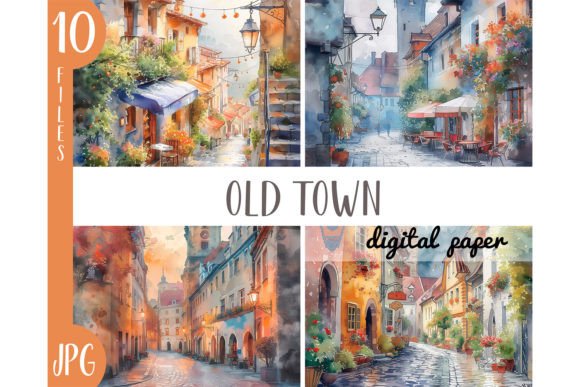
My initial assessment of the Watercolor Old Town Clipart -streets JPG reveals a charming, nostalgic aesthetic that immediately suggests heritage and craftsmanship. The composition features classic European-style architecture with varying rooflines and window details, rendered in a palette that mimics traditional watercolor washes. For an embroidery designer, this visual style is a double-edged sword. On screen, the soft gradients are lovely. Under the needle, however, they require careful interpretation.
The "old town" theme naturally lends itself to travel-related merchandise, historical society gifts, or boutique branding. However, because this is a JPG raster image rather than a vector or pre-digitized file, the success of your final embroidered patch or custom apparel depends entirely on how you handle the digitizing process. The charm of this illustration lies in its imperfections, but embroidery machines demand precision. If you are planning to use this as a base for a new machine embroidery design, you must decide whether to replicate the watercolor effect with complex fill stitches or to stylize it into cleaner lines that stitch more reliably on fabric.
Real-World Application: The Canvas Tote Test
To truly judge the utility of Watercolor Old Town Clipart -streets JPG, I mentally prototyped a specific project: a heavy-weight canvas tote bag intended for a local tourism shop or an Etsy listing targeting travelers. Tote bags are a staple handmade product, but their textured surface can be unforgiving.
In this scenario, the clipart serves as the centerpiece. The challenge here is scale. Architectural details like window panes and shingles can easily become muddy blobs if the hoop size is too small. For a tote bag design, I would recommend keeping the finished stitch area at least 5x7 inches to preserve the integrity of the streetscape. If you attempt to shrink this illustration down to a 4x4 hoop size, the intricate watercolor blending will likely translate into excessive stitch density, resulting in a stiff, bulletproof patch of thread that distorts the canvas.
Furthermore, consider the color matching. Watercolor relies on transparency; embroidery relies on opacity. When stitching this design onto natural canvas, you cannot rely on the fabric showing through to create highlights. You must plan your thread colors meticulously to mimic those light values. This makes the Watercolor Old Town Clipart -streets JPG best suited for intermediate to advanced digitizers who understand how to layer satin stitch and fill stitch to create depth without creating excessive bulk.
Fabric Compatibility and Stabilizer Strategy
Not every substrate is friendly to this type of detailed illustration. Based on the visual complexity of the streetscape, here is my practical guidance for material selection:
- Stable Wovens: Canvas, denim, twill, and linen are ideal. These fabrics support the higher stitch count often required to render watercolor shading without puckering.
- Stretchy Knits: Proceed with extreme caution. If using this for sweatshirt embroidery or baby clothes, the design must be simplified. The dense areas needed to create the watercolor look can cause tunneling on jersey knits unless you use a heavy cut-away stabilizer and potentially reduce the stitch density by 20-30%.
- Textured Surfaces: Avoid terry cloth or high-pile fleece. The fine details of the old town windows and doors will get lost in the nap of the fabric. If you must embroider on these materials, consider using this clipart as a printable mockup for sublimation instead, or simplify the design to bold outlines only.
- Dark Fabrics: Watercolor aesthetics typically rely on white space. Stitching this on black or navy requires a white underlay base, which adds significant density. For dark garments, I would advise against using this specific JPG as-is; look for a high-contrast version or modify the color palette to brighter tones that pop against dark backgrounds.
Commercial Viability for Makers and Sellers
For Etsy sellers and craft business owners, the value of any design asset lies in its perceived quality and uniqueness. The Watercolor Old Town Clipart -streets JPG offers a distinct advantage over generic clip art because of its hand-painted feel. In a marketplace saturated with cartoonish vector houses, a watercolor aesthetic signals "premium" and "handmade" to buyers.
However, professionalism dictates due diligence. Before listing any finished product featuring this design, verify the licensing terms associated with the digital embroidery file or source image. Ensure you have commercial rights for both personal gifts and small shop products. Additionally, if you are selling the physical embroidered item, your stitch-out must be flawless. Customers paying for custom apparel expect clean registration and smooth transitions. If the watercolor effect looks jagged or thread-bare in reality, it devalues the brand. Always run a test stitch on scrap fabric that matches your final product weight before committing to a production run.
Designer Notes for Successful Execution
If you decide to move forward with Watercolor Old Town Clipart -streets JPG for your next embroidery project, keep these technical considerations in mind to ensure a professional result:
- Contrast Check: Convert the JPG to grayscale before digitizing. If the buildings blend into the background in black and white, they will also blend together in thread. Adjust contrast digitally before generating stitches.
- Simplify for Wearables: For items that need frequent washing, such as kitchen towels or baby embroidery, reduce the detail. Complex watercolor shading can degrade over time with aggressive laundering. A stylized running stitch outline with minimal fill may be more durable than a full-coverage reproduction.
- Hoop Size Matters: Never force this design into the smallest hoop possible. Give the architecture room to breathe. Negative space is part of the watercolor aesthetic; filling every millimeter destroys the mood.
- Mockup Testing: Use printable mockups to visualize placement before stitching. Seeing the design scaled on a digital representation of a pillow cover or apron helps identify proportion issues that aren't obvious when viewing the raw JPG file.
- Thread Selection: Matte threads often replicate watercolor better than high-sheen rayon. Consider cotton or matte polyester thread colors to avoid the plastic-like shine that can clash with the organic, painted vibe of the old town illustration.
Final Verdict on Usability
The Watercolor Old Town Clipart -streets JPG is a beautiful resource with high potential for specific applications. It shines brightest in stable, medium-to-large format projects where the nuance of the illustration can be appreciated. It is less forgiving for beginners or for use on stretchy, textured, or dark fabrics without significant modification. As with all illustrations used in textile arts, success comes from respecting the limitations of the medium. By treating this clipart as a starting point for thoughtful digitizing rather than a plug-and-play solution, makers can create stunning, sellable goods that capture the romance of historic streetscapes in thread.