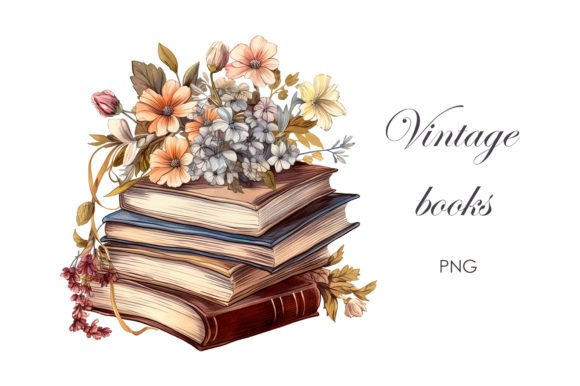
Watercolor Vintage Book Illustrations for Crafters
As a handmade business owner who has spent years navigating the intersection of digital assets and physical crafting, I approach every new graphic design asset with a healthy dose of skepticism. When I first opened the files for this Watercolor Vintage Book Illustration collection, I wasn't just looking for pretty pictures; I was evaluating production viability. My immediate impression was one of refined nostalgia. These illustrations evoke a sense of literary elegance and cozy academia that is currently trending heavily on Etsy and at local craft fairs. The mood is distinctly premium yet accessible, striking a balance between rustic charm and feminine sophistication. For sellers targeting customers who love dark academia, cottagecore, or classic literature aesthetics, this asset feels like a foundational piece for a cohesive seasonal collection.
Elevating Physical Products Beyond Basic Vinyl
In my workshop, I tested this Watercolor Vintage Book Illustration across multiple mediums to see where it truly shines. While many crafters default to adhesive vinyl, these designs are far too nuanced for simple cutouts. They are best utilized as sublimation designs or high-quality printable elements. I successfully applied the artwork to ceramic mug designs and tumbler wraps, where the watercolor texture translated beautifully onto the coated surfaces. The soft edges and blended colors create a painted-on effect that looks handcrafted rather than mass-produced. For apparel, this illustration works exceptionally well in t-shirt design when used with direct-to-film (DTF) transfers or white toner printing, preserving the delicate paper texture that defines the vintage aesthetic.
For those focusing on paper goods, this asset is a powerhouse for sticker design and planner accessories. I created die-cut stickers using my Cricut project settings, and the intricate details held up well when printed on matte vinyl. However, the true value lies in printable design applications. Greeting cards, gift tags, and journal covers benefit immensely from the authentic bookish feel. If you run a print-on-demand business or sell digital products, these illustrations serve as excellent standalone art prints or as decorative accents for wedding stationery and party favors. The versatility allows you to stretch a single design bundle across both physical inventory and digital downloads, maximizing your return on investment.
Technical Realities for Cricut and Silhouette Users
While the visual appeal is undeniable, we must address the technical limitations for cutting machine users. As an experienced crafter, I have to be honest: this Watercolor Vintage Book Illustration is not ideal for intricate vinyl layering. The organic nature of watercolor means there are no hard, clean vector lines typical of pure SVG design files meant for cutting. If you attempt to cut these as standard vinyl decals, you will likely face frustration with weeding tiny fragments and losing the essential shading that gives the image its depth.
Instead, treat this as a print-then-cut asset. When using a Silhouette project or Cricut setup, always utilize the print-then-cut feature. Ensure your registration marks are accurate and that you have simplified the cut line in your software. Do not rely on the auto-trace function blindly; watercolor bleeds can trick the software into creating jagged, unappealing cut paths. Manually adjust the offset to create a smooth border around the illustration. For large format projects like tote bags or wall art, the resolution is generally sufficient, but always zoom in to 100% before printing to check for pixelation. If you plan to use this for commercial design on larger items, verify that the DPI meets professional printing standards to avoid blurry results that could damage your handmade business reputation.
Strategic Pairing and Small Business Branding
A standalone illustration rarely sells a product; it is the combination of elements that creates value. This Watercolor Vintage Book Illustration demands thoughtful typography pairing. During my testing, I found that bold sans-serif fonts clashed with the delicate artwork. Instead, opt for elegant serif fonts or flowing handwritten scripts that mimic the movement of the brushstrokes. For small business branding, this style pairs perfectly with kraft paper packaging, wax seals, and natural linen textures. It communicates a brand identity that values history, craftsmanship, and attention to detail.
When creating product mockups for your creative marketplace listings, avoid stark white backgrounds. Place these illustrations on textured paper, aged parchment, or wood grain backgrounds to enhance the vintage vibe. This context helps customers visualize the final handmade product. Furthermore, consider how this asset fits into your broader shop ecosystem. Does it complement your existing holiday collections? Can it be bundled with other clipart to create a higher-value digital product? Strategic bundling increases average order value and makes your shop appear more established. Remember, customers aren't just buying a picture; they are buying the potential to create something beautiful, and your presentation should reflect that promise.
Essential Pre-Launch Checklist for Sellers
Before listing any finished goods featuring this Watercolor Vintage Book Illustration, run through this practical checklist to protect your business and ensure quality:
- Verify Commercial License: Never assume usage rights. Confirm specifically if the license covers physical end products, digital templates, and print-on-demand services. Some licenses restrict the number of units or require attribution.
- Test Color Accuracy: Watercolors are notorious for shifting between screen and print. Print a test swatch on your actual production material (mug, shirt, cardstock) before committing to a full batch for a craft fair or customer order.
- Check Transparency: If using the PNG design file, inspect the edges against both white and dark backgrounds. Sometimes "transparent" PNGs retain a faint white halo that looks unprofessional on colored substrates.
- Simplify for Scale: If resizing for small items like pen wrappers or earring cards, simplify the composition. Crop to the focal point rather than shrinking the entire detailed illustration, which results in visual noise.
- Mockup Realism: Use realistic shadows and lighting in your listings. Flat, digital-only previews often underperform compared to photos showing the illustration on a real t-shirt design or mug design.
- File Organization: Keep your source files organized by license type and format. When fulfilling custom orders quickly, you cannot afford to waste time searching for the correct high-resolution version.
Integrating this Watercolor Vintage Book Illustration into your workflow offers significant potential for differentiation in a saturated market. By respecting the medium's limitations and leveraging its strengths in sublimation and print-then-cut applications, you can create heirloom-quality items that resonate with buyers seeking authenticity. Whether you are preparing for a busy holiday season or refreshing your evergreen catalog, approaching this asset with a maker’s mindset ensures your final products are as durable and professional as they are beautiful.