Watercolor Family of Lions Illustrations for Branding
Evaluating Emotional Warmth for Artisan Product Lines
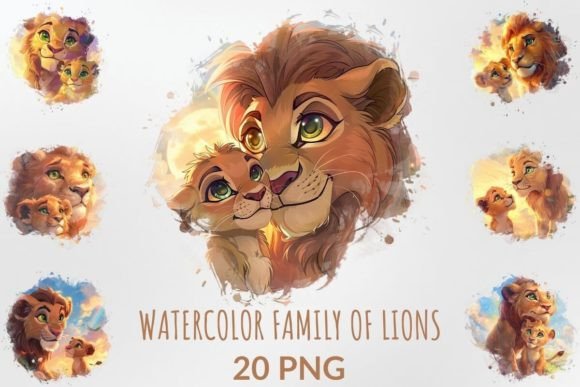
When reviewing the Watercolor Family of Lions Sublimation asset for a recent client project, my immediate focus was on the emotional resonance it carries. As a brand designer working with local businesses, I am constantly searching for graphic design assets that bridge the gap between professional polish and authentic warmth. This particular set of illustrations strikes a distinct balance. It does not feel overly cartoonish or juvenile; instead, the watercolor texture suggests a hand-painted, organic quality that aligns perfectly with artisan markets. The mood is protective, nurturing, and inherently trustworthy.
For a small business branding project, specifically one involving children’s products, family-oriented services, or heritage goods, this asset communicates safety and tradition without feeling dated. The soft edges and blended pigments create a visual softness that contrasts well against rigid packaging structures. In my assessment, this design asset is best suited for brands that want to project a "handmade with love" aesthetic while maintaining commercial viability. It feels premium yet accessible, making it an excellent candidate for boutique stores, handmade soap businesses, or specialty bakeries targeting families.
Strategic Applications in Packaging and Label Design
In practical application, the versatility of this Watercolor Family of Lions Sublimation file becomes apparent during the packaging design phase. For a hypothetical children’s skincare line or a family-owned bakery, this illustration serves as more than just decoration; it acts as a primary brand identifier. When designing a product label, the lions can function as a mascot system. The adult lion might anchor the main logo area, while smaller cubs could be used as secondary icons for flavor variants, scent indicators, or age-range markers.
Beyond labels, this asset excels in creating cohesive unboxing experiences. For handmade sellers and Etsy shop owners, the customer experience extends beyond the product itself. Using these illustrations on thank-you cards, tissue paper patterns, or sticker seals reinforces brand identity at every touchpoint. Because this is a sublimation-ready asset, it translates exceptionally well to physical merchandise. I have found that watercolor textures retain their depth when printed on fabrics like canvas tote bags or cotton aprons, which are popular promotional items for local businesses. The ability to use the same graphic across digital social media graphics and physical product packaging ensures a consistent visual hierarchy that builds recognition over time.
Enhancing Shelf Appeal and Customer Connection
The true value of incorporating such specific illustrations lies in shelf appeal. In a crowded market, generic vector art often fades into the background. The unique brushwork in this Watercolor Family of Lions Sublimation set catches the eye because it mimics traditional art. For food businesses or candle brands, this artistic approach signals natural ingredients and careful craftsmanship. It creates an emotional hook that sterile, corporate design cannot replicate. When customers perceive a brand as personal and cared-for, trust increases. This asset supports that perception by adding a layer of narrative to the commercial design. It tells a story of family and protection before the customer even reads the ingredient list or price point.
Optimizing Visual Hierarchy Across Digital and Print Media
While the aesthetic is strong, a professional branding review must address technical execution. When integrating this asset into web design or marketing visuals, spacing is critical. Watercolor illustrations have irregular edges that can clash with text if not managed correctly. In editorial design or website banners, I recommend using the lions as hero graphics with ample negative space. Do not force typography directly over the detailed areas of the illustration. Instead, let the artwork breathe on one side while placing your headline or call-to-action in the clean space beside it.
For social media managers, this asset provides ready-made content anchors. A square crop of the lion family works beautifully for Instagram profile pictures or Pinterest pins. However, ensure you are maintaining the integrity of the composition. Cropping too tightly can make the watercolor wash look muddy or pixelated. Always work from the highest resolution source file. If you are using Canva templates or other design platforms, verify that the PNG transparency is clean. Jagged white edges around a watercolor element can instantly downgrade the perceived quality of your marketing visuals, making a professional brand look amateur.
Navigating Limitations and Contextual Fit
It is equally important to recognize where this graphic design asset should not be used. Despite its charm, the Watercolor Family of Lions Sublimation is not appropriate for formal corporate branding, legal firms, or tech startups requiring a sleek, minimalist identity. The decorative nature of the illustration competes with dense information. Avoid using it on ingredient-heavy labels or areas requiring strict regulatory compliance text, as the visual weight can distract from necessary readability. Furthermore, luxury minimalist brands often rely on stark whitespace and precise geometry; introducing a soft, painterly lion family may dilute that high-end exclusivity unless styled with extreme intentionality.
Additionally, consider the reproduction method. While optimized for sublimation, test the asset on your specific substrates. Watercolor effects can sometimes appear washed out on dark fabrics or uncoated papers. Always run a test print before committing to a full production run of packaging or apparel. What looks vibrant on a backlit monitor may require color correction to achieve the same impact in physical form.
Technical Due Diligence for Commercial Brand Projects
Before finalizing this asset for any client work or business launch, thorough vetting is non-negotiable. First and foremost, confirm the commercial license. Just because a digital product is available on a creative marketplace does not automatically grant rights for unlimited physical product sales or trademark registration. Read the licensing terms specifically regarding logo design usage. Many illustrators prohibit using their standalone artwork as a trademarkable logo, meaning you cannot claim exclusive ownership of the lion image itself. You may need to combine it with original typography or modify it significantly to create a protectable brand identity.
- Font Pairing Tests: Test the illustration beside various typefaces. A rustic serif font enhances the heritage feel, while a clean sans-serif modernizes it. Avoid overly ornate script fonts that fight with the watercolor texture.
- Monochrome Viability: Check how the design holds up in black and white. If you plan to use embossing, foil stamping, or single-color printing on kraft paper, ensure the values provide enough contrast without color reliance.
- Competitor Analysis: Search for similar lion imagery in your niche. If three other local baby boutiques use the same clipart, your brand will lack distinction. Consider altering the color palette or combining elements uniquely to stand out.
- File Format Inspection: Verify if SVG versions are included for infinite scalability. Raster files (PNG/JPG) have size limits; vector files allow you to scale the lions for a storefront window decal without losing quality.
Ultimately, the Watercolor Family of Lions Sublimation is a powerful tool for specific types of local business branding. It offers a shortcut to achieving a warm, illustrated aesthetic that resonates with family-centric demographics. By applying professional scrutiny regarding placement, licensing, and technical reproduction, small business owners can leverage this asset to build a memorable, emotionally connected brand presence that stands the test of both trends and time. Whether used for a seasonal campaign or a permanent packaging refresh, success lies in treating the illustration as a strategic component of a larger visual system rather than a standalone decoration.