Coconut Drink Clipart Watercolor Bundle Review
First Impressions: Tropical Aesthetics Meet Stitch Reality
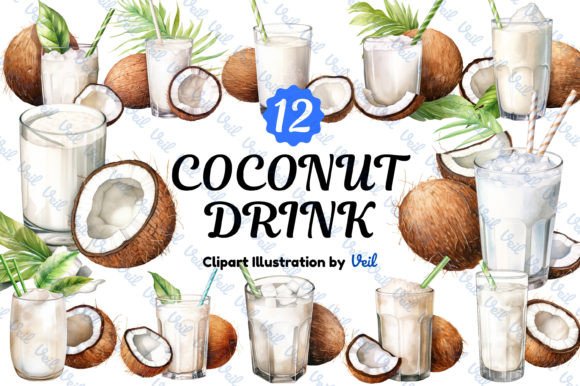
When I first opened the Coconut Drink Clipart Watercolor Bundle, my immediate reaction was a mix of appreciation for the artistic style and caution regarding its translation to thread. As an experienced designer who regularly evaluates digital assets for physical production, I look past the pretty screen preview. I am looking for structural integrity. This collection falls under Illustrations, and visually, it captures that breezy, sun-soaked vacation mood perfectly. The watercolor washes are soft, the coconut shells have organic texture, and the tropical foliage adds necessary framing.
However, watercolor is inherently fluid, while embroidery is rigid. My primary assessment focused on whether these designs rely too heavily on complex color blending that might turn into a muddy mess when stitched, or if they possess enough defined edges to hold their shape on fabric. For a machine embroidery design to succeed, especially one mimicking paint, there must be a clear hierarchy of stitch types. In this bundle, I found that the stronger pieces utilize distinct outlines or high-contrast areas that will translate well into satin stitch borders or dense fill stitch regions, rather than relying solely on subtle shading that embroidery machines struggle to replicate.
The Tote Bag Test: Evaluating Real-World Application
To truly judge the viability of the Coconut Drink Clipart Watercolor Bundle, I mentally prototyped a specific project: a natural canvas tote bag intended for a summer boutique collection. Canvas is unforgiving; it has a coarse weave that can swallow fine details. For this application, I selected a design from the bundle featuring a central coconut drink with bold leaf accents.
In this scenario, the design performs best when treated as a focal point rather than a background element. For a tote bag design, scale is everything. If you shrink this clipart down to fit a 4x4 hoop size, the watercolor nuances will likely get lost in the fabric texture. I recommend utilizing a larger hoop size to allow the stitch density to breathe. When planning the sweatshirt embroidery or apron variation, consider how the design interacts with the garment's seams and pockets. On a tote, you have a flat, stable workspace, making it the ideal candidate for testing the design’s maximum detail potential before attempting it on curved or stretchy surfaces.
Fabric Compatibility and Stabilizer Strategy
Not all fabrics in this category are created equal. While the Coconut Drink Clipart Watercolor Bundle shines on medium-weight woven cottons and canvas, it requires careful handling elsewhere. If you are planning baby embroidery on jersey knit or interlock, the watercolor effect demands exceptional stabilization. Without a heavy-duty cut-away stabilizer and potentially a topping, the stitches will sink into the knit, distorting the coconut shape and making the drink look spilled rather than stylized.
For dark fabrics, proceed with caution. Watercolor aesthetics rely on light passing through layers. On black or navy material, you lose that translucency unless you stitch a white underlay base first. This increases stitch count significantly. Always check your embroidery file properties to ensure the design includes an underlay layer suitable for dark garments, or be prepared to add one manually in your digitizing software. For textured fabrics like terry cloth tea towels, use a water-soluble topping to prevent the loops from poking through the delicate fill stitch areas meant to mimic painted washes.
Commercial Viability for Etsy Sellers and Makers
For the craft business owner or Etsy seller, time is money. You cannot afford to troubleshoot a digital embroidery file during a production run. This bundle offers strong commercial potential because the theme is evergreen for resort wear, bachelorette parties, and summer gifts. However, product value depends entirely on execution. A customer trusts a handmade product when the stitching looks intentional, not pixelated or gappy.
I advise using these designs for items where the tropical theme enhances perceived value without requiring microscopic precision. Think embroidered patches for denim jackets, pillow covers for vacation rentals, or personalized gift sets for beach weddings. Avoid using the most intricate versions of this clipart on caps or hats unless you have verified the design is specifically digitized for curved surfaces. Standard flat embroidery files often distort on the rounded crown of a cap, causing registration issues where the outline pulls away from the fill stitch.
Navigating Licensing and Digital Assets
Before listing any finished product, verify the licensing terms included with the Coconut Drink Clipart Watercolor Bundle. Some illustration packs allow for unlimited physical sales but restrict the resale of digital embroidery files or printable mockups. As a creative entrepreneur, protecting your shop means respecting these boundaries. If you plan to offer custom apparel where the client chooses the colorway, ensure the license covers modification. Additionally, if you create derivative works—such as combining the coconut drink with custom text for a family reunion shirt—confirm that the resulting design asset remains compliant for commercial embroidery projects.
Designer Notes: Technical Checks Before You Stitch
Experience has taught me that skipping the test stitch is the most expensive mistake in embroidery. Here is my practical checklist for integrating this bundle into your workflow:
- Test on Scrap Fabric First: Never run a new design directly on a sellable item. Use a scrap of the exact fabric and stabilizer combination you intend for the final project to check tension and registration.
- Audit Stitch Density: Open the embroidery file in your software. Look for areas where the stitch density might be too high for lightweight fabrics or too sparse for heavy ones. Adjust pull compensation if you notice gaps in the test run.
- Thread Color Contrast: Watercolor relies on hue variation. Ensure your thread colors match the digital palette closely. Test in black and white mockups to see if the design still reads clearly without color reliance; this ensures visibility on monochrome garments.
- Inspect Small Details: Check tiny elements like straws, garnishes, or droplets. If they are smaller than 2mm, they may need to be removed or resized to prevent needle breaks or thread bunching.
- Verify Hoop Size Requirements: Do not assume standard sizing. Confirm the dimensions of each design in the bundle against your machine’s capabilities before purchasing or starting.
- Wash Testing: If creating tea towels or baby items, wash and dry your test swatch. Watercolor-style fill stitches can sometimes pucker or loosen after laundering if not properly secured with adequate underlay.
Final Verdict on Visual Appeal and Professionalism
The Coconut Drink Clipart Watercolor Bundle brings a fresh, artistic flair to the embroidery market, moving away from stiff, cartoonish tropics toward something more sophisticated. When executed correctly, it elevates a simple tote bag or sweatshirt into a boutique-quality piece. The key to success lies in respecting the medium. Treat the watercolor aesthetic as a guide for color placement, but rely on solid digitizing principles for structure.
For makers and small shop owners, this collection is a valuable asset for seasonal inventory, provided you perform due diligence on fabric pairing and stabilization. It bridges the gap between digital art and tactile craft beautifully, but only for those willing to test, tweak, and respect the limitations of thread. By approaching this bundle with a critical, professional eye, you ensure that every finished product leaving your studio reflects the quality your customers expect and the professionalism your brand deserves.